- JLR unveils a new concept demonstrator vehicle, showcasing advancements in circular and low‑carbon design and engineering.
- The vehicle features 49 real components, co‑developed with over 40 supply chain partners to cut their combined carbon footprint by half compared to existing materials and processes.
- The project named ‘Cornerstone’ has delivered multiple industry firsts, including 100% closed‑loop glass and de‑bondable electronics, and proves the potential for use across JLR’s current and future vehicles.
- Initiative demonstrates JLR's significant role in developing the innovation and capabilities needed to enable a more circular automotive industry amid increasing material volatility and evolving regulation.
Gaydon, UK – 24 June 2026: JLR today unveiled a new concept demonstrator vehicle showcasing the company’s latest progress in circular design, low‑carbon engineering and next‑generation material innovation.
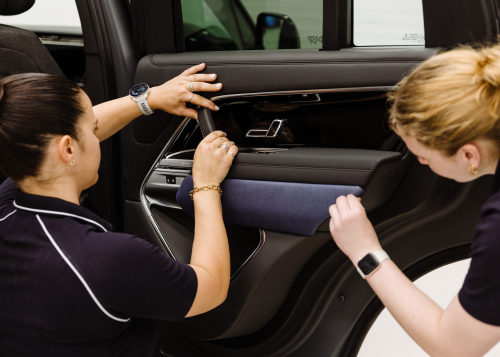
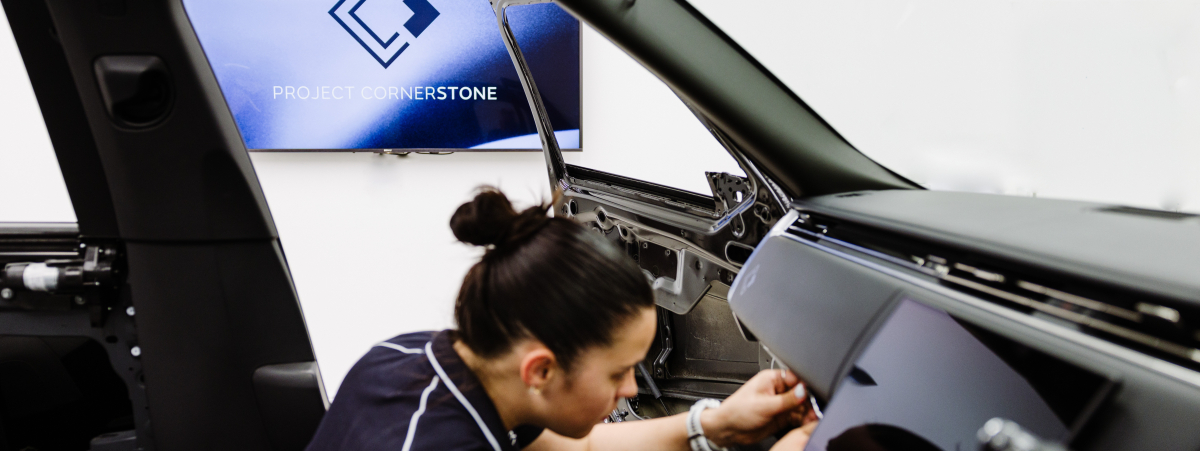
JLR’s engineering and industrial operations teams have collaborated with more than 40 Tier 1 and raw material suppliers to create 49 more sustainable automotive components by maximising recycled, bio‑based and low‑impact materials and designing parts so they can be taken apart for recycling and repair.
The ‘Cornerstone’ project is estimated to have delivered over a tonne of CO₂e savings compared to current processes and materials; the equivalent to a passenger flying from Paris to New York. It has also achieved an increase of almost 140kg in recycled material1.
By producing parts for a real bodyshell, the project helps establish clear pathways for integrating breakthrough solutions into JLR’s current and future vehicle programmes, with new headlamp technology, lower‑emission steel, recycled door glass, recycled seat foam and new FlexAir seat technology already planned for upcoming models.
The project has also resulted in multiple industry firsts such as 100% closed‑loop recycled door glass with a 36% CO2e reduction2, and initiatives affecting critical materials such as de‑bondable electronics that enable headlamp repair and recycling, and 95% recycled magnets in speakers.
“What we're achieving with Cornerstone shows how JLR can lead in advancing circularity across the automotive industry, and the value of a coordinated, multi‑party approach to deliver progress faster.
It’s essential we maintain the highest performance and quality standards. When we engage early on shared goals and each partner in the value chain brings their expertise collaboratively throughout development, production efficiency and overall outcomes improve significantly. This is how real, honest progress is made, and how the economic opportunity of circularity can be realised.”
Paul Francis
Senior Manager Circularity at JLR
“I was privileged to hear about this trailblazing project from Jaguar Land Rover on a recent visit to their design HQ at Whitley in Coventry.
It shows how industry can innovate with government providing a stable policy and investment framework.
We must build a resource resilient economy, where waste is designed out and the cars of the future are built to last. Our upcoming Circular Economy Growth Plan will set out how we will support this green growth in every nation and region.”
Mary Creagh CBE
Minister for Nature
New advancements from JLR’s Circularity Lab, which explores the most effective ways to recover value from end‑of‑life vehicles by improving how easily parts can be reused, repaired and recycled, will continue to feed into Cornerstone, ensuring it evolves as new solutions emerge.
By proactively advancing automotive circularity, JLR is helping to build the capabilities needed for long‑term resource security, industrial decarbonisation and stronger supply‑chain resilience.
JLR also recently joined the Global Impact Coalition’s Automotive Plastics Circularity Project. Found throughout the vehicle, from seats to dashboards, bumpers, and lights, automotive plastics are challenging to separate, sort and recycle. The project seeks to overcome barriers for end‑of‑life plastics so that waste plastics can be transformed into valuable high‑quality recycled material for use in new vehicles.
ENDS
1Total 2674.36kg CO2e baseline across all parts reduced to 1373.78kg CO2e across all parts. Individual part data is supplier validated with independent verification pending.
2100% closed‑loop refers to recycled glass originating from end‑of‑life windscreens and is calculated using mass balance methodology.
Industry first claims are based on the awareness of all parties involved this being the first use in an automotive application.